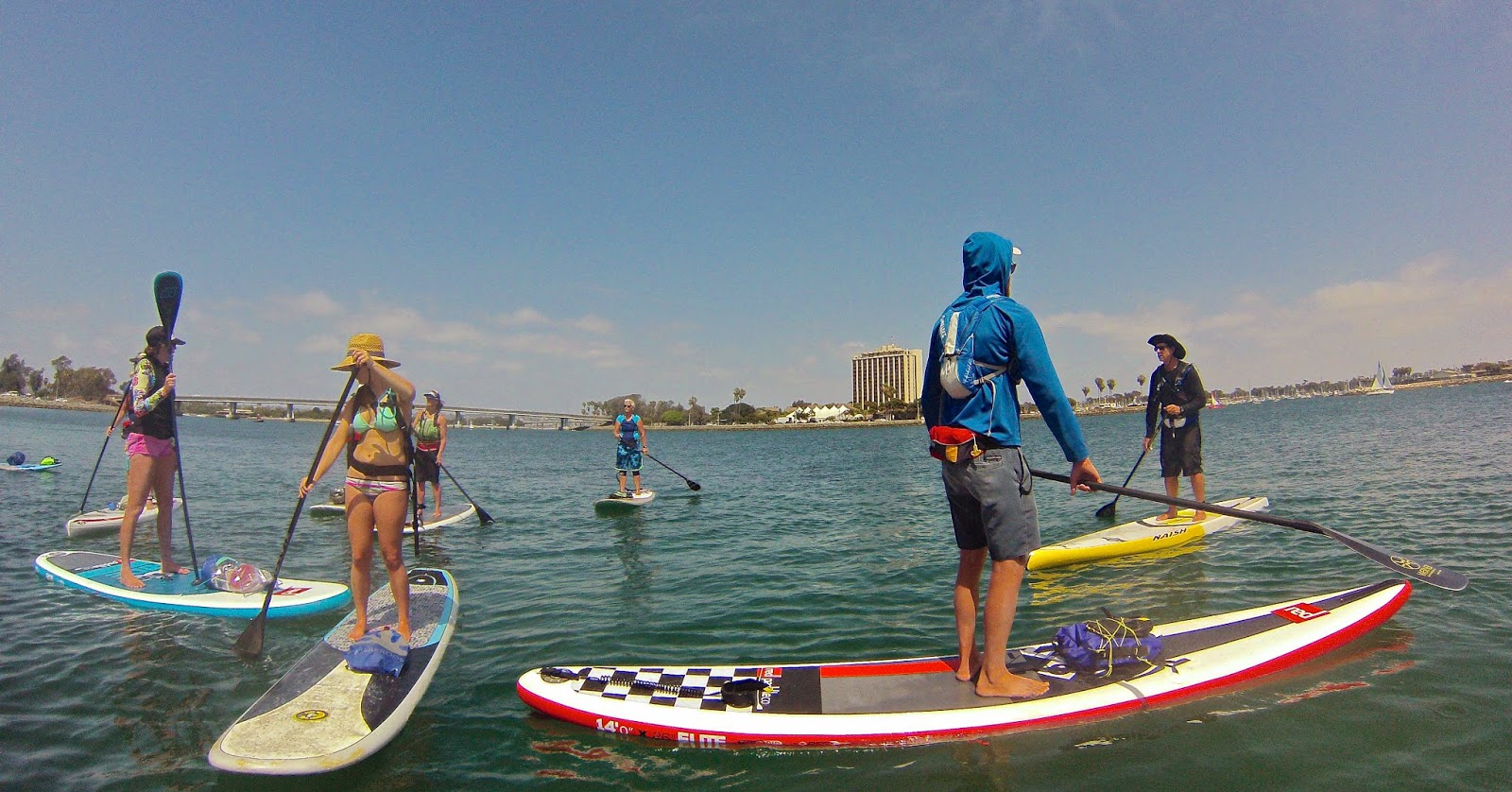
This marks my 3rd course in Portland Maine and my sixteenth course overall. Not bad considering I usually offer only 2-3 courses per season. Last year this course was full with 8. This year we struggled to get only 3 and ended up dropping it to a 2-day Level One course, which turned out to be the right move because the candidates weren't ready for Level Two just yet. Cathy, Caitlin & Emma all did awesome and Portland Paddle is lucky to have all of them as instructors and guides. Big thanks to Portland Paddle for hosting me again this year!
East End of Casco Bay is a tough venue when looking for Level One conditions. Turned out that we had to make our way into Portland Harbor each day to work in a small pocket of perfectly flat water, quite nice spot to teach actually. I enjoyed this because it gave me a real good look into each candidates skills while paddling in wind on the way to the harbor and back. What was only a 5-10 minute paddle gave me tons of insight into their experience and comfort level on a board.
The course was awesome. Super fun, beautiful weather and some great progression.
What really stands out though, is that I realized Level One courses are way more appropriate these days. Most courses I've run in the past have been combined L1 & L2, which is great when you have paddlers filling out the spectrum. What often happens though, which I dislike, is that some paddlers assume they're paddling at L2 standards just because we're covering it. They don't always understand where they fit on the L1/L2 spectrum and it's hard to tell them they're not as skilled as they think they are. The other thing I really don't like that has happened over the years with combined courses is that some people are meeting L1 standards, not quite L2, but might be close enough to send them home with a workplan to meet those standards quickly. Typically we call this a continuation. Sounds great right? It can be, but most often what happens is people go away with a continuation and never really put the work in to meet the standard, and my time gets wasted. What's the takeaway? I'm not offering combined levels anymore.
Showing posts with label ICW. Show all posts
Sunday, June 23, 2019
Tuesday, May 12, 2015
ACA Level 3 SUP Surf - Dana Point, CA
Back in November last year Tim Chandler of TRY Standup and myself started talking about an ACA L3 Surf SUP Instructor Certification Course in California. California is known for surf and this course has never been delivered in this state. A few months of back and forth emails and Tim was at work organizing and hosting the course. Because the ACA SUP program is still fairly new, we had no choice but to fly-in an instructor trainer to deliver it. Keith arrived last Thursday and on Friday morning our group of four candidates met up with him to get started.
For the next three days we surfed, learned, taught and discussed the extremely intricate and physical aspects of technical surfing all day long and into the evenings. The waves weren't perfect but did allow us plenty of wave time. The group of folks was awesome, full of positivity and contributions to the course.
I entered the course without many expectations. I love to surf and I wanted to experience an L3 course just to know what it's all about. L3 is the logical next step after L2, so knowing what students may go through after L2 would help me better prepare them. I definitely have some material to work with and modifications to make the next time I deliver an L2 course, so mission accomplished. Personally, I have some things to work on when it comes to my personal surfing skills. I have a solid base and am working towards surfing at a higher level.
![]() |
| Keith and I splitting the peak. Photo: TRY Standup |
![]() |
| Photo: TRY Standup |
![]() |
| Maggie, myself, Tim, Keith & Mitch. Photo: TRY Standup |
![]() |
| taking our spots in the lineup. Photo: TRY Standup |
![]() |
| Tim shredding the low volume JP. Photo: TRY Standup |
![]() |
| photo: TRY Standup |
Monday, May 4, 2015
SUP Instructor Certification Workshop May 1-3 San Diego
When three days disappear in a blink, you know it's fun. We had a solid group of eleven made up of eight candidates and three Instructors. The real kicker for this weekend is that every single person brought something to the course, most notably their fun personalities and willingness to learn and contribute.
It's difficult to measure the outcome of these courses. You can't just say he or she got certified. The certification shouldn't be and isn't the most valuable piece of these workshops. It's really about improving skill, learning new teaching methods and becoming better instructors for our future students. Candidates dial-in their personal skills as much as possible. They practice with coaching models, they learn and review safety & leadership. They gain awareness and become safer, stronger paddlers. Hopefully they leave the course inspired and stoked for more.
I get better at delivering these courses each time, but I still ask myself 'were we safe?' 'Did we improve our measurable performance?' 'Did we have fun?' 'Was it valuable to the candidates?' 'What could I have done better?' Yes, yes, yes & hmmm. That's the question - what could I have done better? After every course I run, lesson I give or trip I lead, I'm immediately reflecting on the experience and taking notes on what worked, what didn't work, what will I change next time, what could I have done better.
We have a new group of ACA certified SUP Instructors in the US and I'm pretty certain everyone left the course with new paddling friends and a renewed appreciation for the SUP community. That makes me feel pretty good, even though there are lots of things I'll do better next time.
Thank you Mitch for assisting, thank you Tim of Try Standup for assisting and thank you Jen of Aqua Adventures for hosting the course. Fun times!
![]() |
| Chris, Alex, Matt, Paul, Erin, Tara, Dylan, Mitch, Tim & Wendy. photo by Erin O'Malley. |
| double trouble |
Wednesday, March 4, 2015
ACA Level 2 SUP Instructor Certification Workshop - February 27th - March 1st
Fifteen years ago when I was in my first year of paddling I got some great advice from a mentor. "Don't worry about the certifications" he said, "focus on your paddling." From that point on I've never taken an assessment until I was absolutely, positively sure I was ready and able to pass.
- personal paddling skills
- teaching skills
- technical knowledge
- rescue ability
- safety / judgement / leadership ability
- ambassadorship
These are the six criteria we're using to judge where people fit on the ACA SUP instructor scale. It's a difficult job assessing multiple candidates over multiple days on multiple things. It's difficult to decide whether a candidate really has their skills down or if they just seem to be paddling well at that time. Will they stick with it and maintain their skills or will they get certified and become complacent, neglecting to improve any more.
Assessments are subjective and difficult. I do my best but many times it's not black and white. When it's questionable, I'm now in the mindset to make the candidate work harder, reinforcing their skills and making my decision less questionable.
This past weekend, Mitch Silverstein and I ran an L2 Instructor Certification Workshop in Half Moon Bay for 6 candidates. Fun people, fun conditions, fun course.
Tuesday, October 28, 2014
ACA SUP Instructor Certification Workshop - October 24th-26th
Awesome course! A great venue, a great assistant and ten qualified, well experienced standup paddlers added up to one fun weekend. I think everyone walked away super stoked on standup paddling with a bunch of new friends and energy for our sport. For three solid days we worked on personal paddling skills, teaching skills, rescue skills, safety, judgement, leadership and ambassadorship for sup. I feel really good about my delivery and am already brainstorming on how to improve for the next course.
![]() |
| photo by Tim Chandler / trystandup.com |
| photo by Jeff Burton / paddlestandingup.blogspot.com |
| photo by Jeff Burton / paddlestandingup.blogspot.com |
| photo by Jeff Burton / paddlestandingup.blogspot.com |
Saturday, June 21, 2014
Tomales Bay SUP Instructor Certification Workshop
Tomales Bay is an incredibly beautiful Northern California paddling destination loaded with wildlife on land and in the water. It's a spectacular hiking and paddling destination with a diverse climate and weather conditions. Wind is usually on the menu after 11am and downwinding is one of the best activities on the bay. Jeff Burton paddles Tomales Bay a ton and runs a great paddling blog called Paddle Standing Up.
This week Jeff assisted me on a 3-day Instructor Certification Workshop at Blue Waters Kayaking, the leading paddlesports provider on the bay. Collectively, it's the youngest group I've worked with yet and their energy worked wonders helping them progress a ton in a short time and soak up info quickly. We struggled at times with low tides and wind, but that didn't change the amount of fun we had. Each time I run one of these workshops, they seem to get better and better. This one flowed smoothly the entire time in an effective and efficient manner and I feel pretty good about my delivery. Nice paddling in Tomales!
![]() |
| bluewaterskayaking.com |
![]() |
| photo by Jeff Burton. |
![]() |
| Daniel, Chandell, Liz & Dallas. photo by Jeff Burton |
![]() |
| photo by Jeff Burton |
Sunday, March 23, 2014
ACA SUP Instructor Certification Workshop - Newport Beach, CA
These courses are designed for experienced standup paddlers with solid Level two skills. Over the course of the workshop we attempt to progress each candidates skills by breaking strokes & maneuvers down into pieces and reinforcing paddling concepts.
We work on:
- Forward strokes (standard, canted, cross)
- reverse strokes (standard, reverse J)
- draw strokes (standard, sculling, sideslip, cross-nose)
- turning strokes (sweeps, rudders, pivots)
- braces (low, high, sculling, heelside)
- footwork
- rescues & towing methods
- group management & leadership
- trip planning & navigation
We also cover a ton of theory related to paddling concepts, teaching & learning theory, learning styles, delivery methods, teaching models and much, much more.
This course was funded by a US Coast Guard grant with the intentions of better educating key personnel managing & delivering on-water standup paddling programs. Candidates included waterfront directors, college sport providers, municipal recreation managers, adaptive program facilitators and non-profit organizers.
Wednesday, November 20, 2013
ACA SUP Instructors Certification Workshop
What a fun weekend on San Francisco Bay! Cindy & Steve Scherrer came down from WA to help me run an American Canoe Association Level 1/2 SUP Instructors Certification Workshop for 6 potential candidates. We had a great team of paddlers with a ton of learning going on and super support from all. In the end, we certified four new Level 1 Instructors and two new Level 2 Instructors - success!
My best advice for future Instructor Candidates is to review the Instructor Criteria, master the paddling strokes forwards and backwards, onside and offside, and increase your marine environment knowledge as much as possible.
![]() |
| Congrats to Adrianna, Kelsa, Jeff, Alon, Michael & Mitch! |
![]() |
| One of the best venues I've ever worked in |
| Instructor Candidates from Massachusetts, Colorado & California |
| Near perfect conditions all weekend |
The ACA SUP Instructors Program was created on the foundation of 40 years of paddling instructor development. Since 1972 the ACA has been developing curriculum and implementing best practices for paddling instructors from canoeists to kayakers to standup paddlers.
The common question with the 3-day SUP Instructor Workshop is "what are we going to do for three days?" The answer usually consists of something like "we'll do as much as we can, but really we need 4 or 5 days." The way this program is designed, candidates need to have already developed their personal paddling skills before coming to this course so they can focus on the how-to of teaching. More often than not, candidates need personal skills training during the instructor training and aren't quite ready for level 2.
In order to get certified, candidates must demonstrate proficiency & knowledge in a couple different areas like teaching & learning theory, safety & rescue, strokes, maneuvers, technical knowledge, group management, leadership, trip planning and more. There's much more to know than just how to pivot turn and go fast.
The essence of the course is to help candidates become ready to develop a paddling program. The three major segments of that program are:
Strokes & Maneuvers. Can a candidate exercise full control over their board all the time? Do they have the cognitive skills to decide what stroke to use when? Are their strokes efficient? Is their body position safe? Do they understand the main paddling concepts? Do they know the names of each stroke and how to break them down into smaller pieces? Are they able to develop teaching progressions? Do they understand the different ways people learn and can they adapt their teaching methods to foster success?
Rescue & Recovery. Can candidates deal with the unexpected? Are they safe? This includes things like towing, paddler recoveries, unassisted rescue, rescue protocols & signaling. Candidates are required to be certified in CPR and venue appropriate first-aid. Candidates must demonstrate the strength and technique needed to respond quickly and appropriately.
Journeying. Is the candidate a good leader? Can they manage a group of paddlers well? Do they exercise sound judgement & make decisions quickly? Are their trip planning skills adequate? Do they understand the marine environment & the weather? Can they read water?
My best advice for future Instructor Candidates is to review the Instructor Criteria, master the paddling strokes forwards and backwards, onside and offside, and increase your marine environment knowledge as much as possible.
Subscribe to:
Posts (Atom)